If you’re dealing with ongoing pain, stiffness, or poor posture from daily habits, stress, injury, or repetitive strain, myofascial release can make a real difference.
Chronic Pain and Postural Alignment. Hands-on, Root-cause release.
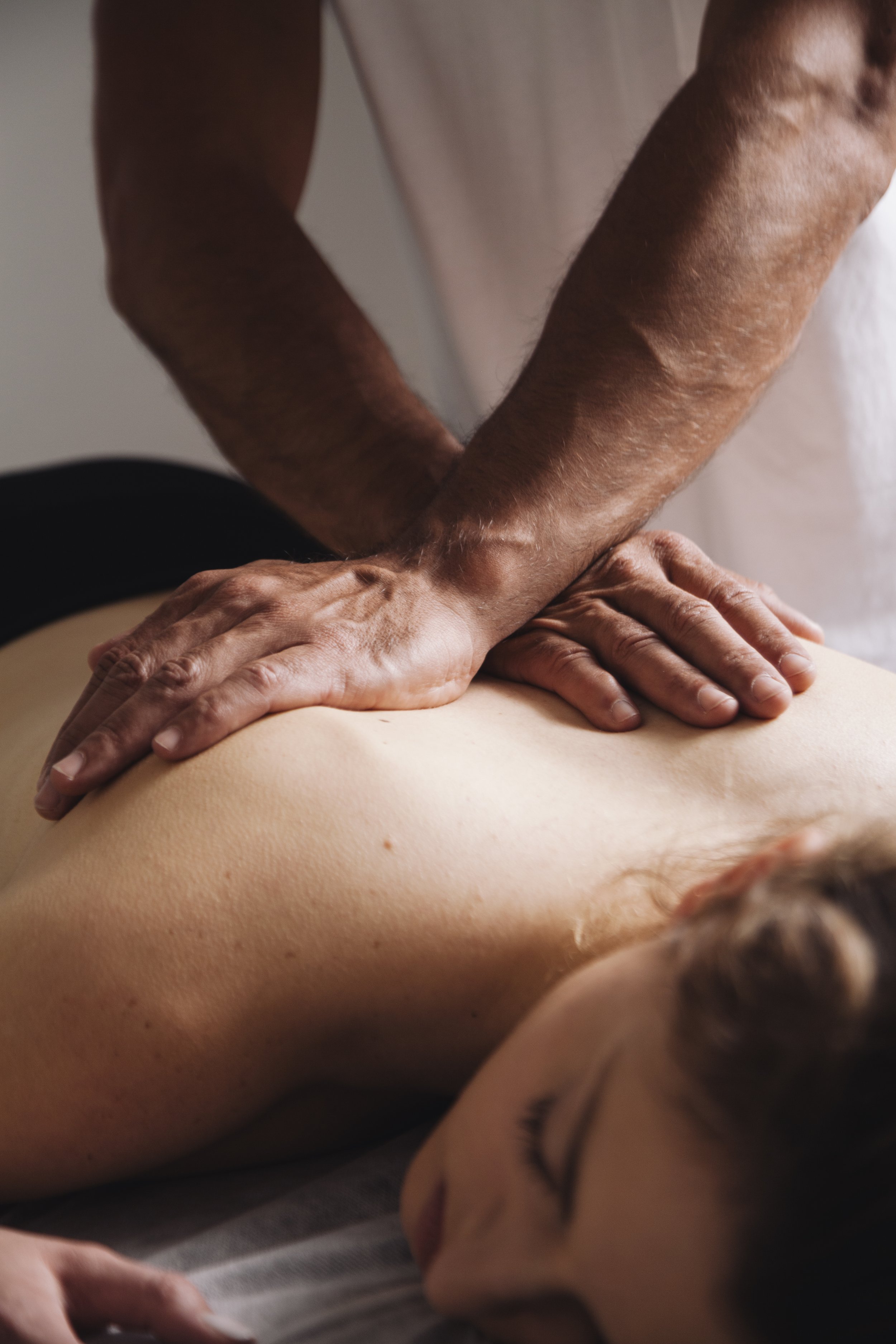
Myofascial release is a gentle, hands-on therapy that targets the fascia — the connective tissue surrounding your muscles — to release restrictions, reduce tension, align posture, and restore natural movement. Unlike traditional massage, it uses sustained pressure to address the root causes of discomfort, helping your body heal from within.
Fascia is a thin, hydrated layer of connective tissue that wraps around every muscle, organ, and bone in your body. When it’s healthy, it’s slippery and elastic — you don’t notice it at all. When it stiffens or dehydrates, movement gets harder and pain sets in.
That ache in your hip, the click in your shoulder when you reach for a cup — often it’s not the muscle itself, but the fascia around it that’s grown tight and restricted. Instead of kneading the muscle, myofascial release works with the fascia directly, encouraging it to soften and glide again.
What Is Fascia? and why it matters.

Myofascial Release Benefits
Reduces chronic pain and muscle tension, from everyday knots to old injuries.
Improves flexibility, range of motion, and posture.
Fascia links EVERYTHING; when it’s free, your shoulders drop, spine lengthens, and everyday turns—like reaching for a shelf—feel effortless again.
Eases symptoms of conditions like back/neck pain, headaches, fibromyalgia, scoliosis, TMJ disorders, carpal tunnel, and sports/overuse injuries.
This work eases the tight web that feeds these problems, smoothing movement and restoring lasting balance.
Benefits also include enhanced circulation, and a sense of deep relaxation—empowering you to move freely and live without limitations.
Promote better overall body alignment and natural movement patterns.
Think of it as recalibrating: walking, sitting, even breathing feel like less effort. Most people stand taller, without even trying.
Supports recovery from injuries or surgery by addressing fascial restrictions and scar tissue build up.
This works alongside physio, easing scar tissue and adhesions so rehab moves faster and hurts less.
-
Tight fascia can pull the body out of alignment, leading to ongoing aches and stiffness. Myofascial release eases these restrictions and helps restore posture and movement.
-
Restrictions in the neck, shoulders, jaw, and head often contribute to tension buildup. Sustained release techniques can mean fewer, less intense episodes.
-
This gentle approach helps soften widespread fascial tightness, decrease pain sensitivity, and improve sleep and energy.
-
Conditions like carpal tunnel or tennis elbow often stem from fascial adhesions. Releasing the affected tissue restores proper glide and reduces nerve compression.
-
These are often linked to fascial restrictions running from the foot through the legs and pelvis. Treating the full line brings more complete relief than focusing on just the painful spot.
-
Car accidents, falls, and whiplash can leave lasting fascial adhesions and guarded muscles. This work gently unwinds that tension and eases nerve irritation.
Before: forward head,rounded shoulders, ribs held in,tight abdomen-everything guarded.
After: neck lengthens, sternum lifted, ribs open, abdomen soft- spacious, tall, easy.
Common Conditions
Myofascial release targets fascial restrictions that often contribute to or worsen these issues. By gently releasing tension in the connective tissue network, it can reduce pain, improve mobility, and address underlying causes rather than just symptoms. Here are some commonly helped conditions.
Many clients also find benefits for post-injury recovery, scar tissue from surgery, postural imbalances, or sports-related tightness. Results vary, but many notice improvements from just the first session, with deeper longer-lasting changes over a series.
If any of these conditions sound familiar, myofascial release offers a non-invasive, whole body approach to get you moving and feeling better.
“Form follows function, but function follows feeling.”
— Ida Rolf